Little Writers, Big Accomplishments: More Than Just Copywork
This post contains affiliate links. I may earn a small commission from qualifying purchases at no additional cost to you. As an Amazon Associate I earn from qualifying purchases.
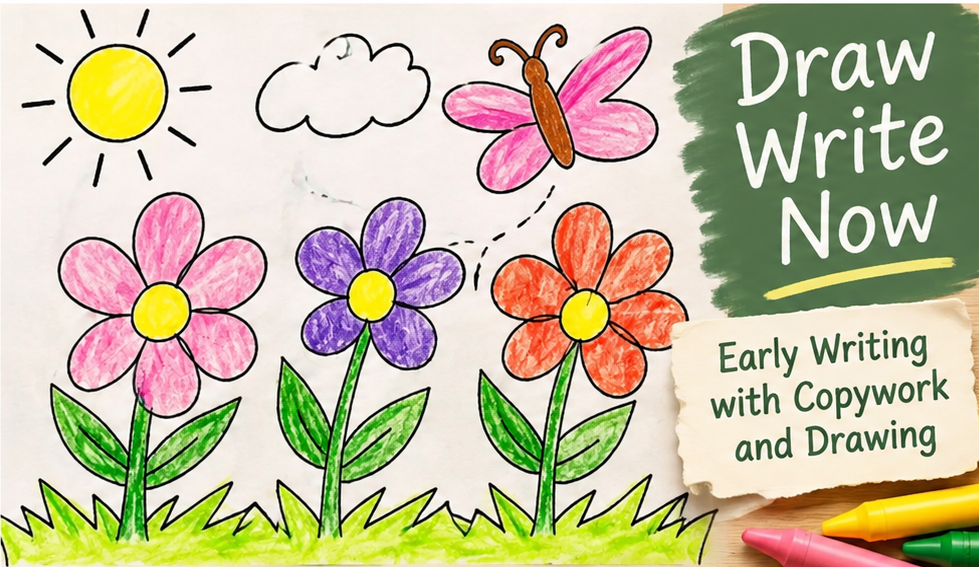
One of my favorite resources for teaching young children is the Draw Write Now series. I used these books with my younger children, especially around ages four to six, and found that they offered so much more than drawing and handwriting practice.
If you’re familiar with the series, you know that each lesson teaches children how to draw a picture step by step. They might learn to draw a little chick, a hen, or another animal. Beneath the illustration are four sentences for the child to copy.
What I loved about these books was how many skills we could practice in one simple lesson.
How We Used Draw Write Now in Our Homeschool
We homeschooled four days a week, so I adapted the lessons to fit our schedule.
Our routine was simple:
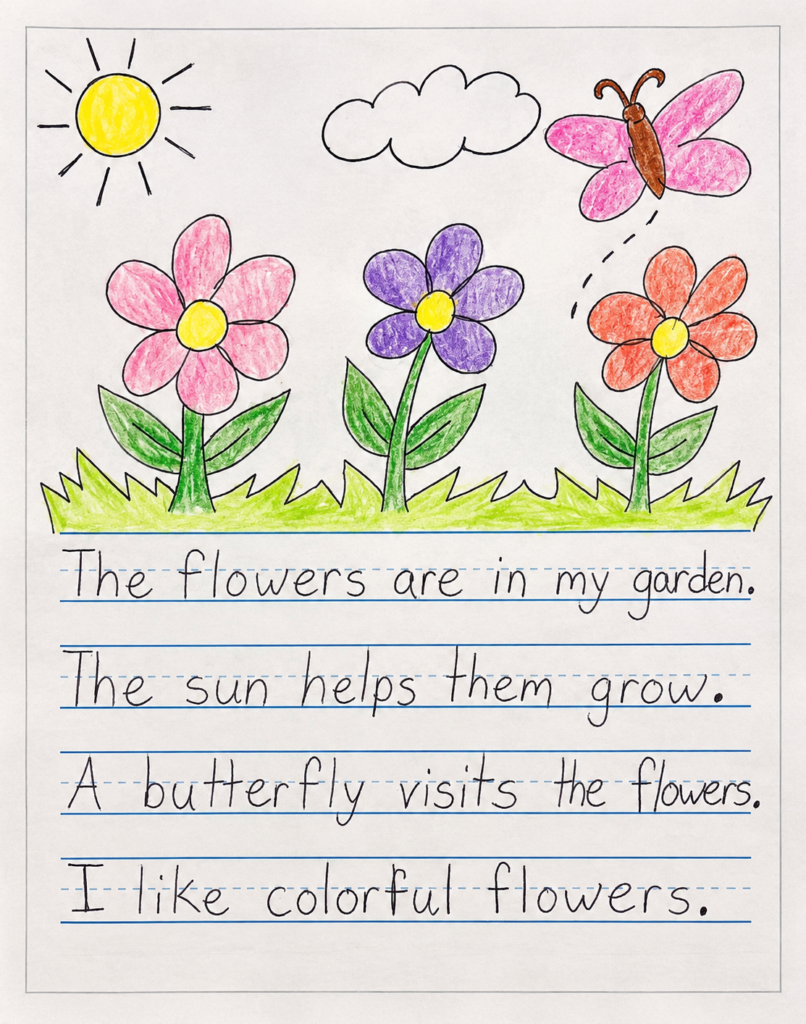
- Day 1: Draw the picture, color it, and copy the first sentence.
- Day 2: Copy the second sentence.
- Day 3: Copy the third sentence.
- Day 4: Copy the final sentence and share the completed work.
By the end of the week, each child had a beautifully illustrated page with four sentences written underneath.
It looked like a little report!
And that was part of what made it so special.
More Than Just Handwriting Practice
Sometimes we expect young children to begin writing by coming up with their own sentences. But think about everything we’re asking them to do.
- Think of an idea.
- Put that idea into words
- Remember how to spell the words.
- Form the letters correctly.
That’s a lot for a beginning writer!
Copywork allows children to concentrate on handwriting and sentence formation without having to do everything at once.
With Draw Write Now, they were also learning to follow step-by-step directions, pay attention to details, and complete a project over several days.
And because they enjoyed drawing and coloring their pictures, the writing became a natural part of the activity.
Little Writers Can Give Reports, Too!
One of my favorite parts came at the end of the week.
My older children were accustomed to preparing reports and sharing what they had learned. Naturally, the younger children wanted to participate, too.
Their Draw Write Now pages gave them that opportunity.
They could stand up and present their very own reports, complete with colorful illustrations.
Some of my children could read their sentences aloud. Others needed a little help reading.

They weren’t just practicing handwriting. They were experiencing the satisfaction of finishing a project and presenting their work, just like their older siblings.
Small Steps Build Confidence
I’ve always believed that children benefit from learning skills in small, manageable steps.
- A young child doesn’t need to write an original paragraph to be learning how to write.
- Sometimes copying one good sentence a day is enough.
- A little report, one sentence at a time.
And along the way, they had practiced handwriting, reading, following directions, and speaking in front of others.
Make the Curriculum Work for Your Family
One thing I’ve learned through years of homeschooling is that a curriculum is a tool. It doesn’t have to dictate your schedule. The goal wasn’t to finish the workbook as quickly as possible. It was to help my children enjoy learning, practice writing a little each day, and experience the satisfaction of completing something they could proudly share.
Sometimes the simplest lessons offer the greatest opportunities for learning.
And sometimes four little sentences and a colorful picture are a pretty big accomplishment for a young writer.
Enjoyed this idea?
Explore the Draw Write Now series on Amazon.